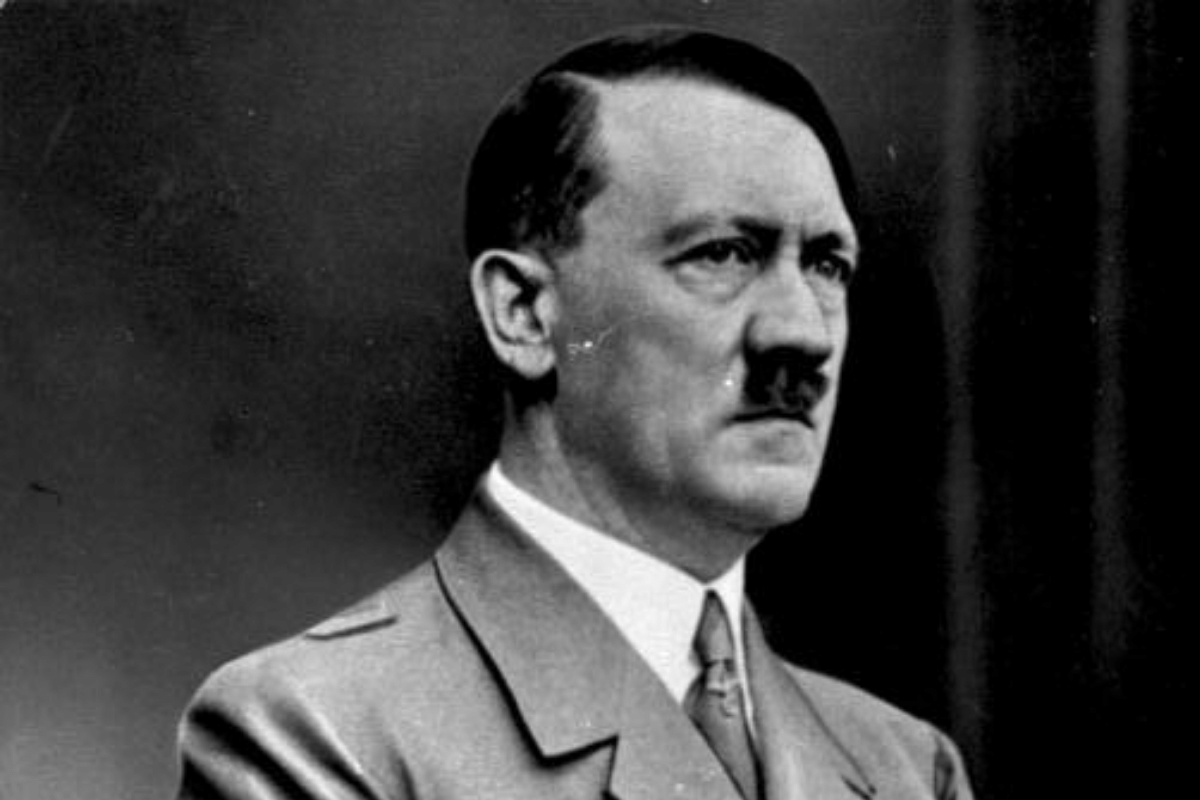
The imminent defeat of Hitler raises many questions as to the past and future of Germany.
According to the reports at the Quebec Conference(1), What to do with Germany once she has been defeated has loomed large as the problem which is worrying the spokesmen of Anglo-American imperialism. They consider this to be as grave and thorny a problem as the destruction of German imperialist power itself. Their fears as to the possibility of maintaining control of Germany by means of Allied armies of occupation has led the imperialists to launch a virulent hate campaign. Now at the head of the gang, spewing forth the foul doctrines of racialism and nationalism, of indiscriminate hatred of the Germans as a nation, thus emulating the worst features of the racial doctrine of the nazis, stands the so-called Communist Party leadership. In the rear, but more cautiously, for fear of their own membership, the Labour leaders, faithfully echo the Vansittart(2) teaching of their imperialist master.
But the fate of Germany today, as it has been for many decades, remains a key question for the fate of Europe. The reason for the insistence of the ruling class and of Stalin on the formula of unconditional surrender, lies in their fear of the socialist revolution which is rapidly maturing within Germany. Once the heavy band of the Gestapo and the SS has been removed there will be no organised force capable of maintaining the repression of the German masses. During the rule of Hitler, monstrous crimes and repressions on the part of the nazis have engendered a hatred which has few parallels in history. An enormous explosion is being prepared which threatens not only to blow the Nazi Party to smithereens but threatens the whole of the capitalist system itself. Every worker in Germany knows that it is the combines, monopolies, trusts and big capitalists who organised Hitler and placed him in control. As Rauschning(3), the ex-nationalist, ex-nazi Gauleiter of Danzig has pointed out, the expropriation of the Jews leads inevitably to the posing of the problem of expropriation of all the capitalists. It is not for nothing that Hitler has attempted to give his demagogy a ‘socialist’ coloration. This reflects the aspirations not alone of the German workers but the overwhelming majority of the German population as a whole. In the past few decades all the forms of capitalist exploitation and political rule have been tried and found wanting. Inevitably the socialist revolution will be automatically posed with the fall of Hitler.
But this is precisely what the ruling class of Britain and America and the traitors in the Kremlin fear more than anything else. The spectre of a Geman revolution – of a new and this time completed 1918, is their main preoccupation now that German militarism is in its death throes.
The instinct of the working class in the Allied countries is, while maintaining implacable hatred for fascism, to distinguish between the fascist thugs and the ordinary German worker. Profiting from their experience after the last world war when all the armies of occupation fraternised with the German masses (who easily convinced them that they were no different from themselves) the ruling class are attempting to place barriers in the way of its reoccurrence. The army staffs of both Britain and America have backed up the ideological campaign of chauvinist incitement by strict orders threatening punishment to any soldiers fraternising with German civilians.
The attitude of the British and American workers to the German workers can decide the fate of the coming German revolution and in so doing, will also decide whether there is to be a new version of fascism and imperialist World War Three. Under these conditions the necessity to enlighten the British masses as to the history and meaning of German events, at least since the last world war, becomes doubly important. It becomes necessary to restate the most elementary propositions of Marxism. Today, those traitors who point the finger of scorn at the German workers pretend that it is the fault of the German workers that Hitler came to power. They attempt to evade their own historic responsibility for this catastrophe. In commenting on the murder of Thaelmann(4) the Daily Worker cynically says that he fought for the united front in Germany with all other working class organisations in order to destroy fascism. That is why it is all the more necessary to explain to the British and other workers exactly what did take place. The new generation, in particular, must understand the part Stalinism played in German events prior to Hitler’s seizure of power, if they wish to understand its present role.
Thaelmann has been murdered by the nazis together with tens of thousands of other victims of the fascist barbarians. But it is necessary to speak the truth if there are to be no more victims of the system which produced Hitler. Now the Stalinists wish to use Thaelmann’s martyrdom as a cover for their crimes against the German people. All the more necessary then, to show the role that Stalinism played in the rise of Hitler.
The truth of the matter is that the Stalinists devoted the major part of their energy to ridiculing the danger of the nazis and concentrated their whole attention on fighting the social democrats as the ‘main enemy’. They fought vicously against Trotsky’s suggestion that the united front was the only means of smashing Hitler and preparing the way for the victory of the working class. From the lips of Thaelmann himself we get the following:
“Trotsky wants in all seriousness a common action of the Communists with the murderer of Liebknecht and Rosa (Luxemburg), and more, with Mr Zoergiebei(5) and those police chiefs whom the Papen regime leaves in office to oppress the workers. Trotsky has attempted several times in his writings to turn aside the working class by demanding negotiations between the chiefs of the German Communist Party and the Social Democratic Party. (Thaelmann’s closing speech at the 12th Plenum, September 1932, Executive Committee of the Communist International.” (Communist International No 17-18, page 1329)
The Stalinists went even further, openly inciting the communist workers to beat up socialist workers, break up their meetings, etc, even carrying the fight to the school children in the very playgrounds! Thaelmann even put forward openly the slogan “Chase the social fascists from their jobs in the plants and the trade unions.” Following on this line of the leader, the Young Communist organ The Young Guard propounded the slogan: “Chase the social fascists from the plants, the employment exchanges, and the apprentice schools.”
But the line has to be carried through to the end. In the organ of the Young Pioneers which catered for the communist children, the Drum, the ‘unifying’ slogan is put forward:
“Strike the little Zoergiebels in the schools and the playgrounds.”
Thaelmann denounced the United Front
Thaelmann indignantly repudiated the very thought of a united front with the Social Democratic Party. In an article published in Die Internationale, November, December 1931, page 488:
“It [the Social Democratic Party] threatens to make a united front with the Communist Party. The speech of Breitscheid(6) (whose murder was announced at the same time as Thaelmann’s) at Darmstadt on the occasion of the Hesse elections and the comments of Vorwaerts on this speech show that social democracy by his manoeuvre is drawing on the wall the devil of Hitler’s fascism and is holding back the masses from the real struggle against the dictatorship of finance capital. And these lying mouthfuls…they hope to make them more palatable with the sauce of a so-called friendship for the communists [against the prohibition of the German CP] and to make them more agreeable to the masses.”
And again in a vehement attack on Trotsky:
“In his pamphlet on the question, How will National Socialism be Defeated?, Trotsky gives always but one reply: ‘The German CP must make a bloc with the Social Democracy…’ In framing this bloc, Trotsky sees the only way for completely saving the German working class against fascism. Either the CP will make a bloc with the social democracy or the German working class is lost for 10-20 years.“This is the theory of a completely ruined fascist and counter-revolutionary. This theory is the worst theory, the most dangerous theory and the most criminal that Trotsky has constructed in the last years of his counter-revolutionary propaganda.” (Thaelmann, closing speech at the 13th Plenum, September 1932: Communist International, No. 17-18, page 1329.)
But it is not necessary to deal with the dupe. The fountainhead of this criminal policy was Joseph Stalin. He even put forward the nonsensical theory that the Socialist Party and the fascists were one and the same thing:
“Fascism, said Stalin, is the fighting organisation of the bourgeoisie, which rests upon the active support of the social democracy. Objectively, the social democracy is the moderate wing of fascism. There is no reason to admit that the fighting organisation of the bourgeoisie could obtain decisive successes either in the struggles or in the government of the country without the active support of the social democracy…There is also little reason to admit that social democracy can obtain decisive successes either in struggles or in the government of the country without the active support of the fighting organisation of the bourgeoisie. These organisations are not mutually exclusive, but on the contrary are mutually complementary. They are not antipodes but twins. Fascism is a shapeless bloc of these two organisations. Without this bloc the bourgeoisie could not remain at the helm.” (Stalin, quoted in Die Internationale, February 1932.)
In carrying out this theory the wise Manuilsky(7) had explained at the 11th Plenum of the Communist International April 1931:
“The social democrats, in order to deceive the masses, deliberately proclaim that the chief enemy of the working class is fascism…Is it not true that the whole theory of the ‘lesser evil’ rests on the presupposition that fascism of the Hitler type represents the chief enemy?” (The Communist Parties and the Crisis of Capitalism, page 112)
It was with this revision of all the teachings of Lenin that the Communist Party of Germany, with the assistance of the social democracy, confused and paralysed the workers and then handed them over without a battle into the hands of the fascist executioner.
The British hypocrites who now slander the German workers applauded this policy of betrayal at the time when the revolutionary socialists were raising their voice all over the world in an effort to prevent the tragedy which was impending in Germany. ‘It is significant’, jeered the Daily Worker of May 26th, 1932, ‘that Trotsky has come out in defence of a united front between the Communist and Social Democratic Parties against fascism. No more disruptive and counter revolutionary class lead could possibly have been given at a time like the present’.
At the eleventh hour,just before Hitler’s coming to power, Ralph Fox wrote in the Communist Review of December 1932:
“The Communist Party of Germany has now succeeded in winning the majority of the working class in the decisive industrial areas, where it is now the first party in Germany. The only exceptions are Hamburg and Saxony, but even here the Party vote has enormously increased at the expense of the social democrats.”These successes have been won only by the most unswerving carrying through of the line of the Party and the Comintern. Insisting all the time that social democracy is the chief social support of capitalism, the Party has carried on intense and unceasing struggle against the German Social Democratic Party, and the new ‘Independent Socialist Labour Party’, as well as against the right wing and Trotskyist renegades who wanted the party of the proletariat to make a united front with social fascism against fascism.”
It is this suicidal policy of Stalinism against which Trotsky and the International Left opposition waged a struggle in the critical years 1930-3 when the fate of Germany hung in the balance. Trotsky’s works on Germany will remain forever as textbooks on the problem of the united front. They will serve as models for the revolutionary movement of the future. That we commence publication of Trotsky’s material on this question in England for the first time, is a reflection on the revolutionary movement in Britain. Every student who desires an understanding of the degeneration of Stalinism will study this material with great care.
Even though Germany – The Key to the International Situation was written in 1931, it retains its freshness at the present time. The outline of the situation, not only in Germany, but in the other countries dealt with, indicates clearly Trotsky’s profound understanding of the political process of development of our period. Trotsky and the Fourth International alone warned of the catastrophe that the coming to power of Hitler would mean for the workers of Germany, Europe and of the Soviet Union. When the Stalinists refused to learn the lesson of events, and in a most cowardly way, surrendered the German masses to Hitler without a fight, or even a shot being fired; when they even went so far as to proclaim the coming to power of Hitler as a victory for the working class – as it expressed the crisis of capitalism and his victory was merely that of the caliph of an hour, boastfully proclaiming ‘our turn next’ – it was then that Trotsky proclaimed the end of the Comintern as a force making for world socialism.
How pitiful, how despicable are the writings of the pen prostitutes of the Kremlin on Germany, when the real historical events are analysed. These Dutts(8), these Rusts, these Ehrenburgs, not satisfied with having betrayed the German workers into the hands of the Nazis, now systematically disseminate chauvinist poison to the Allied workers in order to assist Anglo-American imperialism to enslave the German people. Having proved incapable of leading the German workers to victory, they now actively oppose the socialist revolution in Germany. Thus as always in politics, ineptness and stupidity, if not corrected, become transformed into treachery.
The German and British workers will yet present their accounts not only to their imperialist oppressors but to their hirelings in the ranks of the working class. Once the working class realises the full depth of their treachery, like the traducers of the Commune, they will forever be held to scorn in the memory of the working class.
It would have been impossible to conceive that elements claiming to represent the working class should stoop to such depths as the Stalinists. From the social democrats nothing more could have been expected – they remained faithful to their past tradition of reformist betrayal. The Stalinists have often enough in the past referred to the murder of Liebknecht and Luxemburg and the betrayal of the revolution of 1918. But nothing in their record could equal the long list of crimes marked up to the account of Stalinism.
Surely, all the gods must have laughed at the spectacle of the Stalinist leaders solemnly intoning that it was necessary to ‘re-educate’ the German workers – and their educators? Allied imperialism and Stalinism! Yes, re-education is necessary! Re-education of the ranks of the working class as to the role of the leadership of the organisations claiming to represent them. Re-education which will assist them to burn out the cancer of Stalinism and reformism which will lead the workers only to further catastrophe. In order to accomplish the task of ‘educating’ not only the German but the British and world workers, it is necessary that the advanced guard should be trained and armed with a knowledge of the Marxist method and of the history of past defeats. As an indispensable means of understanding the position in Germany today, it is necessary for the workers to conscientiously study the works of Trotsky. Germany is still the key to the international Situation – with an understanding and with a knowledge of the past and future tasks we will go forward to the building of a new socialist world.
See also The Menace of Fascism—What it is and how to fight it (1948) from the Ted Grant archive.
Notes (from The Unbroken Thread)
(1) Towards the end of the war a series of talks took place, one in Quebec (in 1943), between Churchill and Roosevelt on problems which would emerge for imperialism at the end of the war, especially in the Balkans, central Europe and Germany.
(2) Robert Vansittart, head of the Foreign Office, opposed the policy of appeasement towards Hitler, but primarily from an anti-German stance, while paying lip-service to anti-fascism.
(3) Hermann Rauschning was a capitalist who initially supported the nazis as opponents of the organised working class but then changed his position when the nazis became out of control, publishing a book, We Never Wanted This. In nazi Germany a Gauleiter was a district ‘leader’.
(4) Ernst Thaelmann joined the German Communist Party in 1920, he became its leader with Stalin’s support in 1925. Arrested by the nazis in 1933, he was murdered in 1944.
(5) Karl Zoergiebel was the Social Democratic commissioner of the Berlin police. Fritz von Papen was appointed Chancellor on June 1 1932. On July 20 he removed the Social Democratic government of Prussia. He became vice chancellor under Hitler.
(6) Rudolf Breitscheid (1876-1945) was a socialist deputy in the Reichstag. He fled to France when Hitler came to power and was handed over to the Nazis by the Vichy regime. Vorwaerts was the central organ of the SPD.
(7) Dimitri Manuilsky was secretary of the Comintern 1931-43.
(8) Prominent Stalinist publicists, Dutt and Rust of the British CP and Ehrenberg of the Russian bureaucracy.