1999 Introduction
The articles reproduced below were written to celebrate the 200th anniversary of the Great French Revolution. The events here described are just as relevant and inspirational now as they were then. The French revolution is an endless source of lessons for modern socialists and working class activists. The present republication therefore requires no particular justification. However, as the articles in question were written ten years ago, they contain several references to the contemporary scene which are perhaps not so relevant as they were then. In particular, the references to Gorbachev and his reforms (known as “Perestroika’ and “glasnost”) now seem like ancient history. I merely point out here that, at a time when everyone was hailing Gorbachev’s great reforms, we explained that Perestroika would inevitably fail. That prediction was shown to be correct. But instead of leading to a political revolution which would have carried the USSR forward to genuine socialism, the utter rottenness of the Stalinist regime has led to a capitalist counterrevolution with the most catastrophic results for all the peoples of the former Soviet Union. That, however, is not the subject of the present essay.
At first, I considered re-writing the articles. But this would have been too time consuming. I therefore decided to republish them as they stand, but with an introductory essay in which I could take advantage of the occasion to underline and develop some of the main themes under consideration. Of course, the interest in the French revolution is not confined to France. Like the Russian revolution, it belongs to that category of truly great historical events which are universal in content. The modern socialist who wishes to understand what revolution is would be well advised to study the events of 1789-93 in depth. Likewise, if one wishes to understand the mechanics of the Stalinist degeneration of the Russian revolution, a careful study of the rise of Bonapartism in France provides some very valuable clues and insights.
Today, ten years after the fall of the Berlin Wall, the bourgeoisie has launched an unprecedented ideological counteroffensive against the idea of revolution and socialism. The essence of this counter-offensive is this: that the only possible system is capitalism. It is the first duty of Marxists to answer this lie and show that capitalism is just as doomed as was the regime of Louis XVI and Marie Antoinette. Today as then, revolutionary theory played a key role. The road to revolution was prepared by a remarkable generation of thinkers and philosophers who subjected the established order to a radical criticism. The role of revolutionary theory is just as great today – in fact, more so. The institutions, morality, religion, politics and prejudices of a given society are powerful barriers barring the road to change. They must be challenged and exposed as a prior condition for a fundamental change in society.
Role of the masses
A careful study of the French revolution (and the Russian) provide a complete antidote to the slander that revolutions are the work of tiny handfuls of conspirators and demagogues. The role of the masses is fundamental in driving the revolution forward at every stage. And when this active participation of the masses ebbs, the revolution comes to a full stop and goes into reverse. That was the case both in France and Russia, and led directly to reaction, firstly of the Thermidorian and later of the Bonapartist variety. It is impossible to read the inspiring history of the French revolution in the period of its ascent without a profound feeling of pride in the achievements of a revolutionary people. Here is the answer to all the cowards and sceptics who doubt the tremendous potential that is present everywhere in the masses.
Trotsky defines a revolution as the moment when the masses, that is to say, the millions of ordinary men and women, begin to participate in politics, to take their lives and destinies into their own hands. Revolution stirs up society to the bottom, and mobilises layers that were previously inert and “non-political”. The role of women in the French revolution is a graphic illustration of this fact. Among the most decisive moments in the revolution was the fifth of October 1789, when six or seven thousand women of Paris marched in the pouring rain to Versailles to demand bread and force the king to move to Paris. The men were shamed into joining this strange procession of “the baker, the baker’s wife and the baker’s boy” which turned the king of France into a virtual prisoner of the revolutionary people.
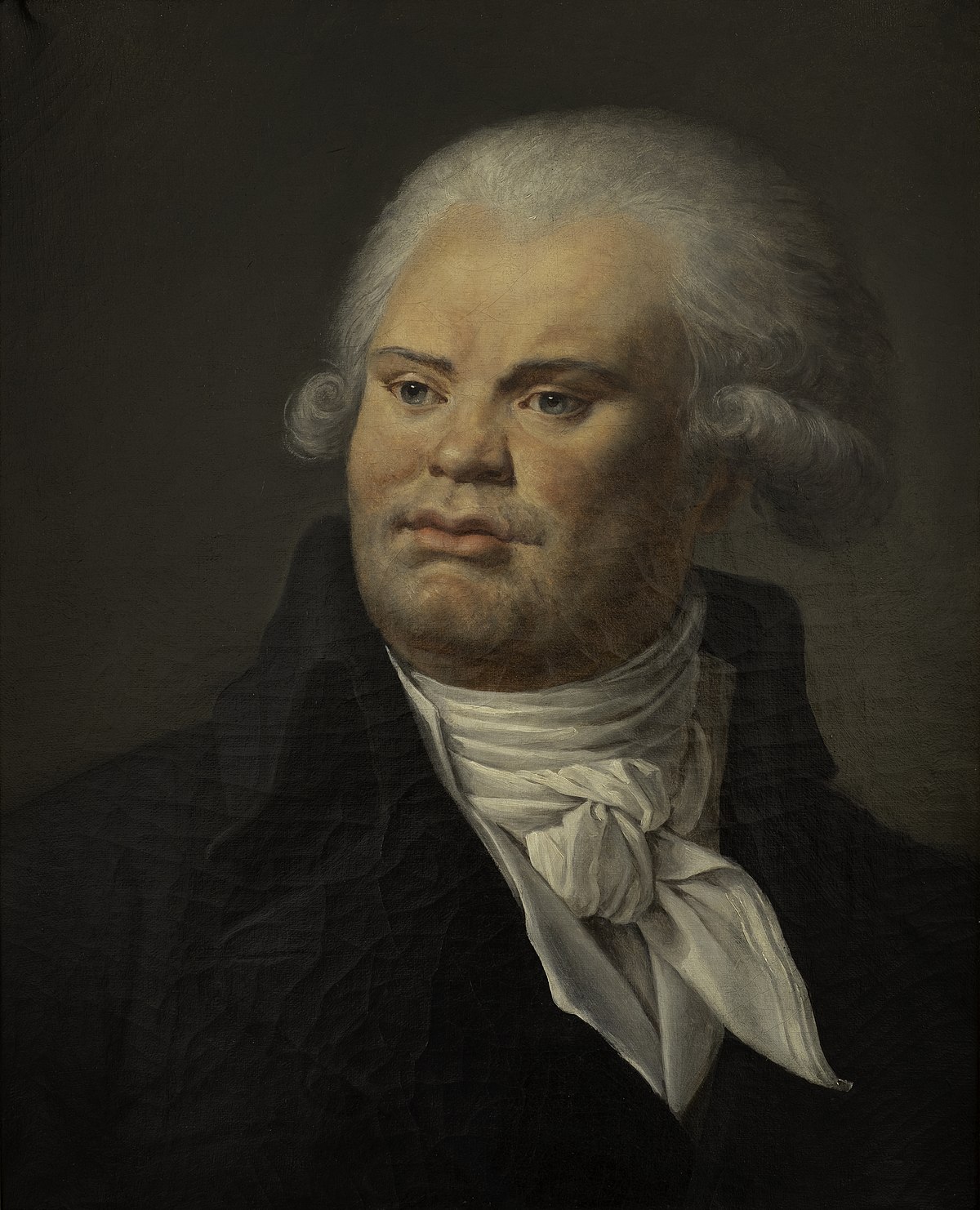
The leaders of the French revolution were great men. Mirabeau was a great orator and able statesman. Danton was a figure larger than life, the rallying point of the Revolution at a moment of terrible danger. And Robespierre, despite all his defects, was a courageous representative of that wing of the Jacobins who leaned on the masses of the Paris poor and semi-proletarians to carry the Revolution forward. As could be expected, the latter-day bourgeois critics of the Revolution have reserved all their most venomous spite for the most consistently revolutionary figures. Robespierre, after being vilified for generations, is now afforded a grudging acceptance. But Marat, that wonderfully courageous man, is still treated as a dead dog, whereas men like Hébert, the most consistent leader of the masses, is hardly mentioned at all.
But the greatest protagonist of the Revolution has no name. It is the revolutionary people itself, those countless unknown and unsung heroes and heroines who were the mainspring of the entire process. Where the masses are allowed any role at all, it has traditionally been as a kind of dumb herd of animals involved in a blind revolt against suffering. This version also does not do justice to the truth. The spontaneous movement of the masses, it is true, played a most important role. But even here the movement was not entirely spontaneous. It had its local leaders, although most of their names have not been preserved. They were organised in the equivalent of political parties.
The basic cell of the Revolution, especially in Paris but also in the provinces, was the club and the secret society. It is impossible to understate the importance of organisations like the revolutionary clubs, whose model was the Jacobin Club (“The Society of the Friends of the Constitution”) in Paris. Here the masses came to debate the burning issues of the day, to listen to the most popular leaders, to cheer and hiss, to argue – to decide. Through the medium of their clubs, the masses put pressure on the elected deputies in the National Assembly; they mobilised public opinion; they acted as a focal point to channel discontent. In many ways they played a similar role to that of the soviets in the Russian revolution. And in the same way as in the soviets, the progress of the revolution was measured by the rise and fall of political tendencies in the clubs, in which the more extreme tendency always succeeded the more moderate one – until the Revolution had finally run its course and exhausted itself. A similar process can be observed in the English Revolution of the mid-17th century, where Cromwell’s Model Army played an analogous role to both the clubs and the soviets.
By the end of 1790 the Jacobin Club in Paris had 1,100 members – almost all members of the radical middle class. By the time the monarchy fell, it had more than a thousand local societies affiliated to it, and the membership included a growing number of artisans and other proletarian and semi-proletarian elements, although the leadership remained firmly in the hands of middle-class professionals like Robespierre. More important still was the Paris Commune and the numerous local communes that imitated it in the provinces. In June 1789 the 407 elected delegates of the Etats-généraux established themselves in the Hôtel de Ville in Paris as a kind of unofficial municipal government. By December 1789 local uprisings had established similar bodies in towns and villages all over France. These bodies tended to come together to form the focal point and organisational centre of the revolutionary movement. This was particularly the case in Paris, but also applies to other areas.
In August 1792 the working class districts of Paris provided the focal point for an insurrection against the Legislative Assembly, storming the Tuileries and arresting the King. They demanded universal male suffrage and the election of a new National Convention. They also set up a revolutionary government or “Commune” in Paris. Robespierre was elected onto it. The Commune was dominated by the extreme wing of the Paris Jacobins. In effect, it gave rise to a situation analogous to Dual Power in the Russian Revolution after the February Revolution. It sat along the National Assembly and exercised constant pressure on it. It provided a base for Robespierre and the left wing Jacobins. Under the pressure of the Commune, a single-chamber assembly of the National Convention was finally elected on universal male suffrage in late 1792. This was the motor-force that impelled the Revolution forward.
The question of violence
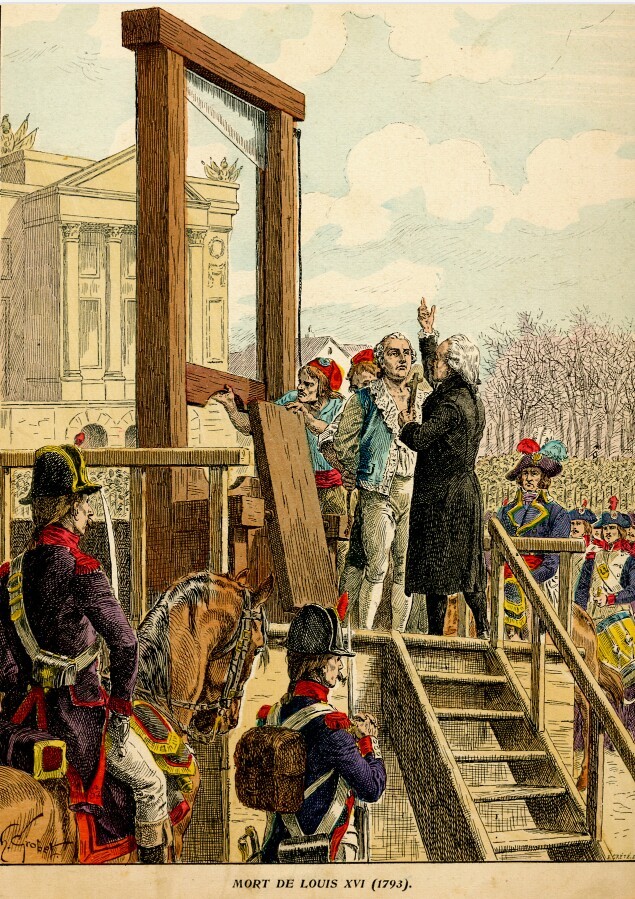
The enemies of revolution always try to tarnish its image with the accusation of violence and bloodshed. As a matter of fact the violence of the masses is inevitably a reaction against the violence of the old ruling class. The origins of the Terror must be sought in the reaction of the revolution to the threat of violent overthrow from both internal and external enemies. Thus, the Brunswick manifesto of July 27 offered “fraternity and assistance” to all peoples that were prepared to follow the French example and fight for their freedom. The internationalist spirit of the Revolution was expressed in the December Resolution of the National Assembly that declared that in any territory occupied by the armies of the Revolution, feudal obligations would be abolished and the property of the Church and aristocrats confiscated. War in Europe now meant revolution. This was the reason for the spectacular successes of the French revolutionary armies that triumphed all along the line against monarchist-feudal reaction.
The revolutionary dictatorship rested on revolutionary war. The active support of the masses was guaranteed by combining the war against foreign enemies with the class war at home. Under Robespierre the National Assembly took energetic measures against the rich, especially the nouveaux riches speculators. There were also measures in favour of the poor. Taxation and confiscation were aimed at the redistribution of wealth. The Law of the Maximum tried to control inflation by setting a ceiling for price rises. In the period of its ascent the Terror was a weapon in the hands of the masses directed against the enemies of the Revolution – aristocrats, landowners, treacherous bourgeois and recalcitrant priests. It is true that many others fell victim, especially in the districts where civil war raged, but the intention was to eradicate and cow the reactionaries. This is admitted by a serious historian who is generally critical of Robespierre and the Terror. “Atrocious though it was,” writes David Thomson, “by the test of atrocities committed by modern dictatorships, the Terror was mild and relatively discriminating.” (D. Thomson, Europe Since Napoleon, p. 41)
But in the period of its decline, the victims of the Terror were revolutionaries. The difference is fundamental. In the White Terror that followed the fall of Robespierre, apart from the 90 Jacobin leaders who were immediately executed, a countless number of revolutionaries were murdered in secret. The reforms of the Jacobins were replaced with counter-reforms. The Maximum was abolished. Reactionary émigrés were allowed to return, while revolutionaries were killed or imprisoned. David Thomson gives a vivid picture of the class nature of the new Directory and its backers:
“The new ruling class which backed the measures of the Directory, as of the latter-day Convention, included businessmen and financial speculators, army contractors and landowning peasants all those middle-class elements that had profited most from the revolution and the war. These new rich, vulgar in taste and unscrupulous in habits, they wanted above all to consolidate and increase their gains.” (ibid., p. 44.)
France and Russia
With the exception of a single word, the above description would apply exactly to the upstart caste of bureaucrats who usurped power in Russia after the death of Lenin and who persecuted the real Bolsheviks with the same zeal as the Thermidorian reactionaries in France hunted and oppressed the Jacobins. In both cases, we are dealing with a petit bourgeois reaction against revolution, at the point where the masses, worn out by years of exertion and sacrifice, have begun to fall into passivity and indifference. This is the reason for the defeat of the Jacobins in France and the followers of Trotsky in Russia by men who were in every respect their moral and intellectual inferiors.
Of course, the class content of the French Revolution was different to the October Revolution. Every historical analogy holds good only within certain limits. The Thermidoreans were the representatives of the rising bourgeoisie which was the real beneficiary of the French Revolution. The Stalinist bureaucracy was not a class, in the sense of the word used by Marxists. It did not own the means of production, but was only a parasitic growth on the body of the workers’ state. Its power and privileges depended on the nationalised property forms established by the October Revolution. In order to defend these new property forms against the bourgeois elements in Russia, the Stalinists were prepared to lean on the working class to strike blows against the kulaks and nepmen. But it did so, not to return to the democratic soviet regime established by Lenin and Trotsky, but to erect a monstrous totalitarian caricature of a workers’ state. Whereas in France, the crystallisation of a bourgeois revolution under Napoleon led to bourgeois Bonapartism, in Russia, the degeneration of a proletarian revolution under Stalin led to proletarian Bonapartism.
Given the bourgeois character of the French Revolution, no other outcome was possible. True, the Revolution was so successful because of the involvement of the plebeian masses. Because of this it went further than was really possible on a bourgeois basis. The masses had to be put in their place and taught a lesson! This was shown in the bloody repression of a series of revolts in the course of 1795 and in particular in the October uprising in Paris which was put down in blood by general Barras and his young subordinate Napoleon Bonaparte.
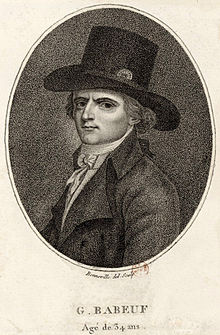
The last gasp of the Revolution was the episode known to history as the Conspiracy of the Equals led by François-Noël (“Gracchus”) Babeuf in 1796. In a last desperate attempt to halt the slide towards reaction and as a protest against the power and privileges of the rich, a new club was launched in Paris – the Society of the Panthéon. The old dreams of the Revolution were re-awakened. Old Jacobins became active in the club, which met in a crypt by torch light and issued its own newspaper, Le Tribun. Sensing that this club was a potential rallying-point for revolt, the Directory sent General Bonaparte himself to close it down in February 1796.
The extreme left wing of the club, led by Babeuf, established an insurrectionary committee of six (“The Secret Directory”) and prepared an uprising. But these were only the empty forms of a movement the substance of which had already dissolved. Babeuf’s movement was both too early and too late. It was too late to breathe new life into a movement that had already run its course and reached its historical limits, and too early to inscribe upon its banner the slogan of the socialist revolution, whose time had not yet come. From the very beginning, the conspiracy of Babeuf was doomed. Its aims were utopian: a return to the Constitution of 1793 and a revival of the original idealism and sincerity of the Revolution. To put the clock back was impossible. But in one way Babeuf’s movement pointed the way, not back to 1793 but forward to the future, to the struggle of the working class for socialism. He inscribed on his banner the idea of a “Republic of Equals” in which communism would abolish the differences between rich and poor.
It is said, with some reason, that the Church was built on the blood of martyrs. The same is true of the revolutionary movement and the movement of the working class in general. The revolt of the Equals was a courageous act of defiance and a rallying-call for future generations that has echoed powerfully down the ages. Its organisers cannot be blamed for not understanding that the material conditions for a classless society had yet to evolve under capitalism. That great discovery was only made by Marx and Engels half a century later. What is important is that they kept faith with their people and never surrendered, preferring death to ignominious capitulation. They were defeated – and were bound to be defeated – but they left behind a banner and a tradition for the future generations. In the same way, the Trotskyist Left Opposition which led the fight against the Stalinist political counterrevolution in Russia created a tradition upon which future generations could base themselves. They sacrificed themselves so that the spotless banner and traditions of the Revolution might be preserved.
Babeuf was by no means a hopeless utopian dreamer. He was a practical revolutionary and took every practical step to ensure the success of the uprising. Preparations were thorough. Arms were stored; ammunition stockpiled; plans were elaborated to act on a designated signal to seize the key public buildings and bakeries. But the fatal weakness of the whole enterprise was shown by the emphasis laid by the conspirators on penetrating the army, police and administration. This was a tacit admission of the changed nature of the situation. The masses were exhausted and passive. Their discontent was expressed in murmurs and silent curses against the Directory, but the old fighting spirit was no longer present. That is why Babeuf placed exaggerated hopes on infiltrating the army and state with his revolutionary agents. Under these circumstances, the movement necessarily assumed the form of a conspiracy – a movement that unfolded, so to speak, behind the backs of the masses.
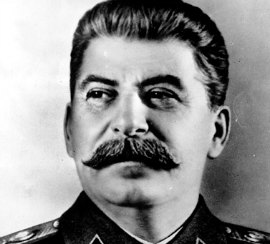
Such a movement was easily infiltrated by agents of the regime. Just as Stalin. the ex-Bolshevik, was well aware of the danger of a small revolutionary organisation, so the ex-Jacobins of the Directory were no strangers to revolutionary tactics, and were able to install their spies inside the ranks of the conspirators from the very outset. On the eve of the insurrection, they pounced. The leaders were arrested and put on trial. This early ancestor of Stalin’s Show Trials was designed to strike terror into the masses and all those who would challenge the new aristocracy. It was held before a special court (i.e. one that would be sure to return the required verdict) and lasted for three months. But here the analogy with the Moscow Trials ends. Whereas Stalin’s victims were deprived of any possibility of defending themselves or expounding their views, Babeuf was at least permitted to use the court to assail the regime and propagate his communist and revolutionary ideas. Having honourably defended his cause, Babeuf attempted to cheat the Guillotine of its victim through suicide, but failed. The execution of Babeuf was the last act of the infamous White Terror that closes the history of the French Revolution. Thereafter, the course was always on a declining tangent.
After the rotten and corrupt Directory comes the equally rotten and corrupt personal dictatorship of Bonaparte, which restored all the outward trappings of the old aristocratic order, while preserving the main socio-economic gain of the Revolution: the handing over of land to the peasantry. Hence the French peasantry’s fanatical loyalty to Bonaparte and his successors. Bonapartism is, in essence, rule by the sword – the personal dictatorship of a military strong man. But it also has another peculiarity. The Bonapartist dictator tends to balance between the classes, presenting himself as the embodiment of the Nation, standing above all classes, above good and evil. By attacking the Left, the Directory tilted the balance far to the right. The royalists in the Convention scented blood and became increasingly bold. In September 1797, the Directory was compelled to appeal for Bonaparte’s help to expel the newly-elected royalists from the Convention. By this fateful step, Bonaparte became transformed into the supreme arbiter of power in France. A series of political crises created the conditions for the inevitable dénouement. On 9 November (18 Brumaire, according to the revolutionary calendar), Bonaparte seized power in a coup, with the support of Barras and Sieyes. The formula for the new Constitution accurately conveys the nature of the Bonapartist regime: “Confidence from below; power from above.”
Just as Stalin included former tsarist officials in his regime, so Napoleon’s entourage included many former royalists. Many of the old trappings of the former regime were revived. The law was reformed in a counterrevolutionary spirit. The position of women was degraded by the emphasis of the authority of the father over his wife and children and the property of the family. Wives were subjected to their husbands, divorce was made more difficult. Above all, the new Code stressed the sanctity of private property. But it also firmly upheld the property rights of those who had acquired the former lands of the aristocracy and the Church. This is what secured the new regime the blind allegiance of the peasants who saw in it the guarantee of the social and economic gains that they had obtained through the Revolution. This and this alone explains the fanatical devotion of the French peasant (and thus the French army) to Napoleon Bonaparte.
These few reflections on the French Revolution do scant justice to the subject. But if these articles serve to whet the reader’s appetite to delve more deeply into the history of the Revolution, and to draw the necessary conclusions, the effort will not have been in vain.
London, 22nd December 1999.
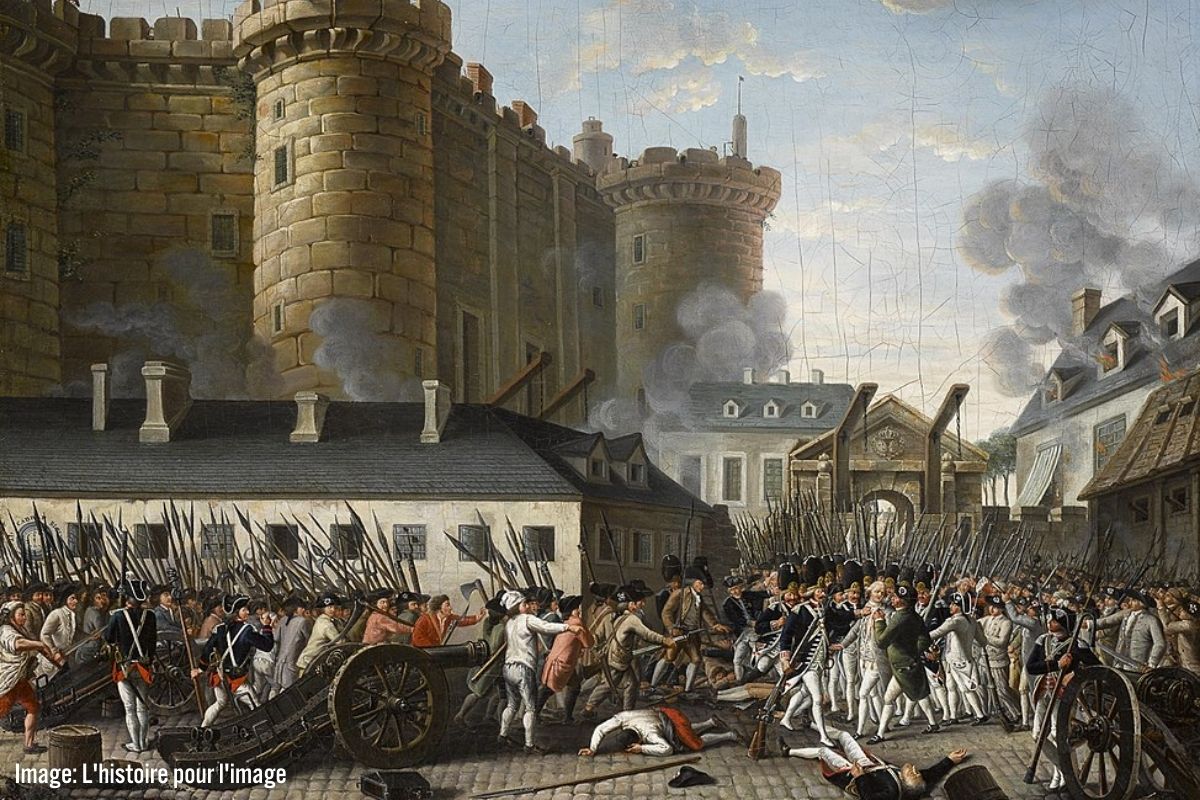
Click here to read part one: 1789, the fall of the Bastille
Click here to read part two: 1792, rise and fall of the Jacobins