The period between 1918 and 1939 was the most revolutionary in world
history. It was touch and go for the survival of capitalism. A
devastating blow could and should have been inflicted against global
capitalism in China in 1925-7, instead the opportunity was frittered
away.
The period between 1918 and 1939 was the most revolutionary in world
history. It was touch and go for the survival of capitalism. A
devastating blow could and should have been inflicted against global
capitalism in China in 1925-7, instead the opportunity was frittered
away.
In Part Two we described how the revolution began in 1925
with an explosion of strike activity and mass protests as a result of
capitalist exploitation and imperialist oppression. This new high tide
was prepared for by years of increasing proletarianisation and
unionisation, victorious strikes, peasant land seizures and of course
the experience of 1911. But the scope and militancy of the movement in
1925-6, strong enough to bring the workers to power in Shanghai and
Guangzhou had the leadership been conscious of it, was breathtaking.
Guangzhou
May 30th Movement Propaganda PosterGuangzhou,
probably the second most important economic hub of the country at that
time, with amongst the highest concentration of workers, was immediately
brought to its knees by a general strike that was the result of the May
30th Movement. In colonial, oppressed nations even more than
in the West, everything in society is dictated behind the scenes by
powerful, distant interests. Handfuls of apparently omnipotent people
decide the fate of millions. The monotony of this fact gives rise to an
illusion whereby the mysterious forces dictating our lives appear
utterly unquestionable and unshakable. But then at special moments,
known as revolutions, all this is turned on its head when suddenly the
one condition for the ruling class’ power, the acquiescence of the
exploited majority, disappears and is replaced with its opposite.
How
could an unknown, uneducated, impoverished Cantonese person possibly
hope to exercise any sway over how their city was run, let alone his or
her own life, especially when the city was really owned by the
imperialists? And yet in June 1925 we see that it was precisely these
“nobodies” who held decisive control over the city by bringing it to a
halt. Thanks to their heroic determination and unity as a class, there
was nothing even the British could do to stop them.
It is worth
quoting Harold Isaacs at length on this unstoppable movement to convey
the scope, strength and militancy of it, just in case there were any
doubts as to the independence and class consciousness of the workers’
movement, without which the revolution would never have begun. In
particular, note the level of organisation, discipline and maturity
displayed by the workers in whose hands Hong Kong and Guangzhou lay,
“Incomplete statistics gathered by a Chinese labour investigator recorded 135 strikes arising directly out of the May 30th
shootings, involving nearly 400,000 workers from Guangzhou and Hong
Kong in the south to Beijing in the north. At Hankou on June 11th,
a landing party of British sailors fired on a demonstration, killing
eight and wounding twelve. In Guangzhou, Chinese seamen employed by
British shipping companies walked out on June 18th and three
days later were joined by practically all the Chinese workers employed
by foreign companies in Hong Kong and Shameen. On June 23rd, a
demonstration of students, workers, and military cadets paraded in
Guangzhou. As they passed the Shakee Road Bridge, British and French
machine gunners on the concession side of the creek opened fire on the
marchers. Fifty two students and workers were killed and 117 wounded.“A
boycott of British goods and a general strike were immediately
declared. Hong Kong, fortress of Britain in China, was totally
immobilised. Not a wheel turned. Not a bale of cargo moved. Not a ship
left anchorage…The strike halted all foreign commercial and industrial
activity. It drew 250,000 workers out of all principal trades and
industries in Hong Kong and Shameen. In Guangzhou workers cleaned out
gambling and opium dens and converted them into strikers’ dormitories
and kitchens. An army of 2,000 pickets was recruited from among the
strikers and a solid barrier was thrown around Hong Kong and Shameen.
The movement was, by all accounts, superbly organised. Every fifty
strikers named a representative to a Strikers’ Delegates’ Conference,
which in turn named thirteen men to serve as an executive committee.
Under the auspices of this body, actually the first embryo of workers
power in China, a hospital and seventeen schools for men and women
workers and their children were established and maintained…A strikers’
court was set up which tried violators of the boycott and other
offenders against the public order.” (Isaacs, The Tragedy of the Chinese Revolution)
This
shows clearly that the embryo of a workers’ state was being formed in
China at this time. The workers were sending out a clear signal that
this was their revolution. Unprompted by anyone else, they expressed a
bold creativity, determination and fearlessness in the face of the
mightiest military powers on earth, taking to the organs of workers’
power, soviets (for that is what was being established), in an exemplary
fashion. The Chinese working class was proving in action that it had
not only learnt very quickly from the West, but that it was actually the
most advanced proletariat in the world at the time.
“It
is possible for constituent parts of society to hasten their retarded
development by imitating the more advanced countries and, thanks to
this, even take their stand in the forefront of development, because
they are not burdened with the ballast of tradition which the older
countries have to drag along.” (Kautsky, quoted in Trotsky, Results and Prospects)
Wang Fanxi, a direct participant in the movement at this time, describes the powerful effect it had on him,
“The
strike committee of the Guangzhou-Hong Kong general strike…and its
constituent bodies (the workers’ tribunals and militia, the huge
strikers’ canteens, and so on), particularly impressed me. I had never
seen anything of the sort before…On my second day in Guangzhou I
looked across the creek to the British concession on the island of
Shameen, where I saw all the doors and windows of the Western-style
houses sealed and shuttered. There was not a sign of life, and in the
open spaces between the houses the grass was growing knee-high. The
effects of the strike were to be seen everywhere…I took part in lively
mass meetings of the strikers. I remember vividly to this day the
activities of the local strike-committee branches in Guangzhou. In each
branch there was a long table covered with red cloth, and on the walls
were the pictures of revolutionary leaders framed in red…I was amazed
to see how knowledgeable and capable the Guangzhou workers were…the
strike committee was in fact rivalling the authority of the National
Government in a situation of dual power, and had even taken the law into
its own hands. This was the first time I understood what the theory of
the hegemony of the working class meant in practice.” (Wang Fanxi, Chinese Revolutionary)
The Straits Times,
a mouthpiece of British Imperialism based in Singapore, reported a
similar situation in Shanghai at exactly the same time, “June 4:
Shanghai: no attacks on foreigners are reported today, but the strike is
spreading. The newspapers report that roughly 100,000 men are out,
chiefly coolies…Practically all the Chinese staffs of the Eastern and
Great Northern Telegraph companies have joined the strike.” The CCP
convened a General Council of Shanghai Trade Unions, whose call for a
general strike was the cause of the above quoted actions. Thus Shanghai
was also brought to a standstill.
As was the case in the Russian
and countless other revolutions, this unplanned realisation of workers’
power was too sudden to be consolidated and transformed into a workers’
government. The vast majority of the country, i.e. the countryside, had
not yet risen, was probably largely unaware of what was going on in the
big urban centres, and was still under the control of the old state
apparatus and landlords. The actions of the workers would inevitably
inspire the peasants to their own insurrection, but not yet. Without a
clear political programme of taking this power that lay in their hands
and using it to complete the revolution, inevitably the political
initiative was seized by the bourgeois Guomindang.
As has been
mentioned in Part Two, the Guomindang had in 1924 taken power in the
Guangdong area. The way in which they took this power is very
instructive. Local feudal militarists had wanted to strike a deal with
the Guomindang so that they could maintain the status quo in this strike
afflicted region by wearing a “progressive” Guomindang mask. Instead
pressure from workers and particularly peasants in the countryside
provoked a struggle for power between the militarists and the Guomindang
lead forces of the Whampoa Military Academy. The workers and peasants
tipped the balance of forces for the Guomindang by actively sabotaging
the militarists’ strategy. In other words a deal between the Guomindang
leadership and the militarists over the heads of the masses was
prevented by the mass forces of workers, peasants and rank and file
officers, which combined on a class basis to sweep away the generals.
The Whampoa Academy
The
Whampoa Academy was a military academy set up in 1924, which means it
succeeded in driving out the forces of these two militarist generals in
the very same year in which it was founded. Such military successes that
appear to be against all the odds express a profound truth neglected by
bourgeois historians and military strategists – that wars are fought
for class interests, and in the wars between the classes, that class
which represents the future has an enormous advantage despite often
having technically inferior forces.
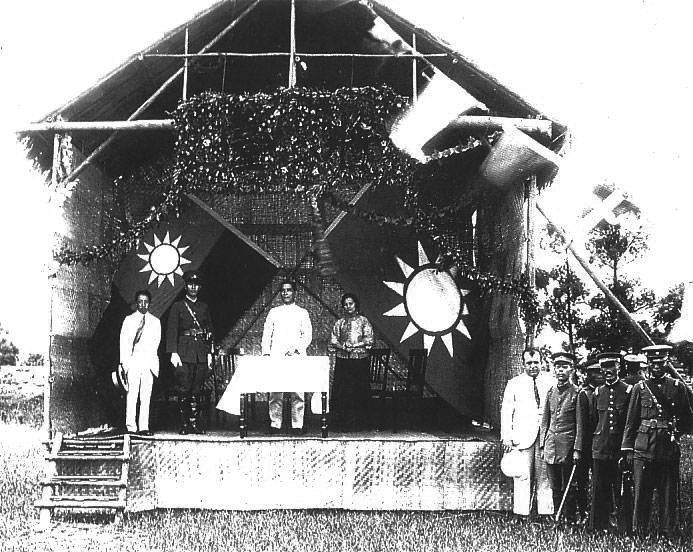
Whampoa Academy had been planned by Sun Yat Sen and the Guomindang for
years, with the aim of establishing a force with which to wage a war
against the ruling warlords and to unite China into one modern republic,
completing the failed aim of the Xinhai Revolution in 1911. But of
course, if one wants to wage a war, in a country the size of China,
against numerous warlords, one requires substantial funds, access to
military hardware and plenty of soldiers, who need to be fed and paid.
In other words, an army must have an economic and social basis. The
class character of the Guomindang is summed up in the fact that, despite
announcing the ambitious plan to overthrow the old regime, to unify and
modernise China, they were obliged to seek financial and political
support for this scheme from the various Western imperialist powers –
the very same people who had been making deals with the old regime,
bombing the Chinese people on behalf of the old regime, and plundering
the country’s resources. This may sound ridiculous, but if a party does
not base itself on the power of the working class, where else is it to
find a reliable and powerful source of finance and technology, if not
from the ruling class? That support was sought for from abroad also
shows that there was no up-and-coming Chinese moneyed-class prepared to
bankroll such an adventure. Unsurprisingly, the imperialist powers
rejected Sun’s pleas for aid.
When the Whampoa Academy finally was
formed, it was not on the Guomindang’s initiative – they had by then
given up on the idea. Instead the idea had to be resuscitated by the
Comintern. Comintern representatives as well as Li Dazhao from the CCP
eventually persuaded Sun Yat Sen to set the Academy up, by making him an
offer he couldn’t refuse – the Soviet Union would bankroll the project,
provide it with military advisers, and the members of the CCP would
help the academy in various ways, all without the Guomindang having to
surrender political and military leadership. Under pressure from the
Comintern the CCP even obligated itself not to criticise Sun Yat Sen and
his “Three Principles of the People”, a petty bourgeois theory of class
collaboration.
In other words, the Comintern went out of its way
to ensure the success of this military academy on the class basis of the
power of the Chinese working class and peasantry and with money from
the Russian workers’ state. And yet the Comintern unnecessarily
abnegated control of this powerful force to an alien political party.
This party had not wanted to create the academy unless it had the
backing of the very same imperialism that had sent its armies to invade
Russia only six years previously. This academy was to be essential for
the later successes and dictatorial rule of the Guomindang over the CCP
and the Chinese people.
The victory against the Yunnanese warlords
was clearly assured by the enthusiastic participation of workers and
peasants. In a classical bourgeois revolution, such as in Britain or
France, the movement would not go much further than this military
victory over the reactionaries. In both cases, the new found power of
the bourgeoisie was later used to make a compromise with the nobility.
But one year after the establishment of Guomindang power through the
Whampoa Academy, a new, far higher phase of the revolution swamped the
city and completely overtook the Guomindang regime. The spontaneous
movement of the working class in 1925 shows that there was a direct
struggle for power between the bourgeoisie and the working class,
something that was impossible in Britain and France in 1640 and 1789
respectively.
Nevertheless, as we have stated, this situation of
dual power in Guangzhou between the bourgeoisie and the working class
could not be sustained. Lacking a political expression of their power,
the working class could not consolidate it or become fully conscious of
it, and inevitably the Guomindang reasserted control. This was
especially easy for them, since the Comintern and CCP failed in its
basic task of helping the workers to understand the necessary political
lessons. The whole purpose of the Comintern should have been to impart
the invaluable experience of the Russian Revolution to workers
throughout the world, i.e. the lesson that the working class cannot ally
with the bourgeoisie, since the latter has diametrically opposed
interests. As Lenin said of Russia:
“Ours is a
bourgeois revolution, therefore the workers must open the eyes of the
people to the deception practised by the bourgeois politicians, teach
them to put no faith in words, to depend entirely on their own strength,
their own organisation, their own unity, and their own weapons.”
Instead
of bringing the workers to consciousness of the fact that they had
control of Guangzhou, did not need to rely on the Guomindang, and must
not trust the Guomindang, the Comintern deliberately suppressed any
consciousness of this.
The “Three Principles of the People” and the “Four Class Party”
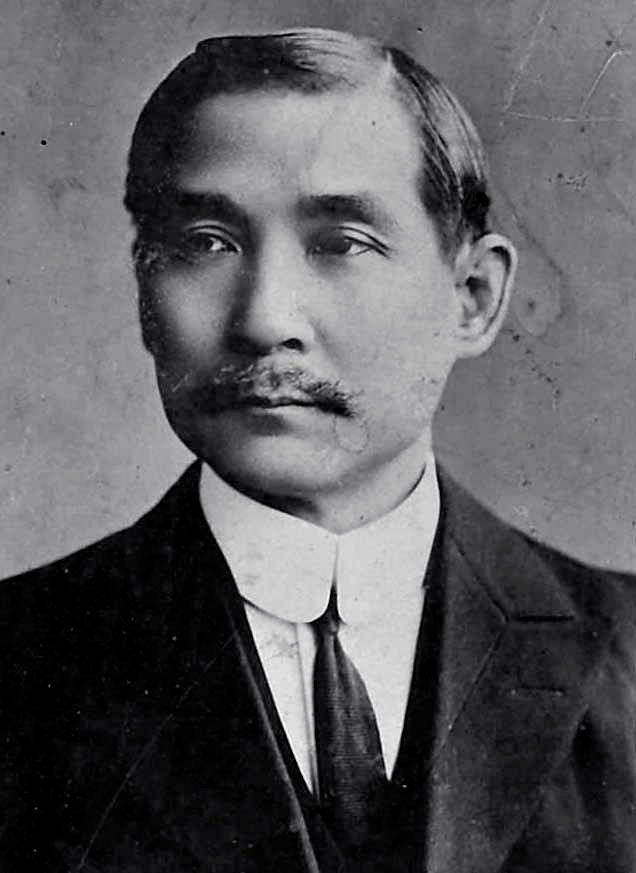
a result, the Guomindang declared a new National Government in June
1925, although in reality it only had power in Guangdong. But thanks to
the mass movement of workers and peasants in the province, which had
consolidated the Guomindang’s power as against that of the militarists,
the basis was now laid for the anti-warlord Guomindang led “Northern
Expedition”, a march from Guangdong province in the far south up to
Shanghai and ultimately Beijing in the North East. This would establish
the national power of the Guomindang and its new leader Chiang Kai-shek
17 years after they had failed to do so in 1911. But it couldn’t have
been done without the CCP.
Ever since the starting gun for the
revolution had been fired by the working class and the Communist led
trade unions, the strategy of the CCP should have been to win sections
of the rank-and-file of the Guomindang (as well as non-aligned workers)
to an open Communist programme. This could be done by fighting alongside
and supporting the progressive steps that the Guomindang was obliged to
take (such as taking power from the militarists in Guangzhou, or
starting the Northern Expedition against Warlord rule), with the
precondition that the CCP present itself as an independent party
fighting for socialism. It could show in practice its commitment to the
struggle for national independence, explaining that the best way to
achieve this would be through mobilising the working class and peasantry
to fight against the Warlords on a programme of land redistribution,
etc.
Although seeking to work with and influence members of the
Guomindang, the Communists should never have concluded from left
statements by Guomindang leaders that the friendship with such a
bourgeois party was guaranteed. As we explained in Part Two, the entire
lesson of Bolshevism is the need for the class independence and
discipline of the revolutionary party. Bourgeois parties, which in the
era of the 20th Century could not be revolutionary, are not
like this. The leadership determines its policy through its ties with
the bourgeoisie and imperialists. It can hardly tell this truth to its
own membership (who are mostly petty bourgeois) let alone the general
public. So it has to lie to its membership/voters and cannot permit them
any real control over its policy. It is for this reason that bourgeois
parties are more loosely organised at the rank and file level.
“’Lefts’
predominate in conferences, congresses, and the Executive Committee of
the Guomindang, but this solacing circumstance is ‘not reflected in the
composition and politics of the Nationalist government.’ How
astonishing! But, after all, the left petty bourgeoisie exists only to
display its radicalism in articles, and at conferences and banquets,
while handing the power over to the middle and big bourgeoisie.”
(Trotsky, Class Relations in the Chinese Revolution)
Despite
the sudden successes of the CCP, there is no doubt that the party was
in 1925 too weak to engage the revolution without appealing to the
Guomindang masses, who were indubitably against imperialism but did not
understand that the leadership of their party was not sincerely so. The
task for the CCP then was to help them to understand that,
“’And
what about the Kuomintang masses, are they mere cattle?’ Of course they
are cattle. The masses of any bourgeois party are always cattle,
although in different degrees. But for us, the masses are not cattle,
are they? No, that is precisely why we are forbidden to drive them into
the arms of the bourgeoisie, camouflaging the latter under the label of a
workers’ and peasants’ party.” (Trotsky, The Third International After Lenin)
Naturally
the Guomindang right wing was concerned from the start about its
partnership with the CCP, which they never trusted no matter how many
compromises it made, so the situation of dual power in Guangzhou must
have set the alarm bells ringing in all the cliques at the top. “How can
our respectable party have allowed itself to be associated with this
dangerous riff-raff?” they must have thought.
Of course without a
leadership able to present a programme to take the movement forwards,
the strike wave abated. As we said, in Guangzhou it cemented the
Guomindang’s power, a step forward at least, but in Shanghai, where the
workers’ movement was initially supported by some merchants (they
predictably left the movement before the workers), the strike fizzled
out with no party, neither CCP nor Guomindang, strong enough to take
power.
Despite the stunning power and organisation of the pickets
in Guangzhou, there was little change in social conditions under the
newly consolidated Guomindang government. Much like the current
situation in Egypt and Tunisia, the masses were effectively told to be
patient and not to expect any immediate change in life by the very
people who had ridden to power on the backs of the masses. Instead, they
should place their trust in their new leaders to sort everything out in
time,
“These forces [of popular struggle] had been
primarily responsible for the victory of the Guomindang in Guangdong.
Only by grace of them did the Guangzhou government exist at all, a fact
which Chiang Kai-shek even publicly acknowledged. Yet the government was
not required to respond in any concrete manner to the interests of the
workers and peasants. A few minor tax burdens were eliminated. The rest
was in the realm of promise.” (Isaacs, op cit., our emphasis)
There
are moments in history which are like great ruptures after which
everything is changed, when all the previous social alignments are
rearranged. Those who appeared as great friends suddenly showed
themselves to be mortal enemies. Following the tumultuous events of June
1925, it was recognised not only within the corridors of Guomindang
power, but also amongst the hitherto anti-Western merchants, that the
working class, its powerful unions and the CCP that led them were their
mortal enemies who threatened their entire existence.
The guiding
theory of the Guomindang, as espoused by Sun Yat Sen, was that of the
“Three Principles of the People”, which was basically a utopian theory
of bourgeois national unity and harmony, directly inspired by Western
liberal democracy. Mirroring the thinking of the Chinese bourgeoisie, it
was anti-imperialist and “socialist” only insofar as these things could
be granted peacefully and under the smooth leadership of the merchants.
It never asked serious questions as to which social class and in which
way such a break with imperialism might take place. If it had asked
these questions, it would have stumbled across the unfortunate fact that
China’s national independence could only be achieved through a
determined revolutionary struggle in which all the masses would have to
be brought to their feet.
Whenever the workers and peasants moved
against imperialism, it was condemned by the Guomindang for not
involving all the classes of China and for breaking from harmonious
Guomindang leadership – in other words, they detested the real face of
revolution which they could not lead. “The peasants, workers, owners of
businesses, and merchants – are all allies in the national
revolution…The Guomindang is placing before itself the task of freeing
from oppression not only the workers and peasants, but also the
industrialists and merchants.” (Left Guomindang statement, May 25th
1927, Hankou, our emphasis). As Trotsky commented “this is precisely why
the left Guomindang is demanding that the workers observe
“revolutionary discipline” – with respect to the industrialists and
merchants” (Trotsky, It is Time to Understand, Time to Reconsider, and Time to Make a Change).
Abandoning
Marxism, Stalin announced that the Guomindang was a “Four Class Party”
or “Bloc of Four Classes”, in which the working class, peasantry, urban
petty bourgeois and “national bourgeois” were united in a common cause.
Only the landlords and the compradore bourgeois were excluded, although
exactly how a line was drawn between these two and the national
bourgeoisie was unclear. This idea is utopian and marks the rapid
decline in political leadership and theoretical analysis under Stalin.
Less than ten years previously the Bolsheviks had taken power on the
basis of a political leadership that understood that there could be no
dual class leadership of the peasantry and the working class (let alone
with the bourgeoisie) because the peasantry’s scattered and varied
interests meant they could never play a leading political role. They
will always follow the leadership of the workers or bourgeoisie. Any
party of dual class leadership would in reality mean the subordination
of clear working class leadership to that of the bourgeoisie.
Intra-Party Fissures
Of
course the presence of irreconcilable class antagonisms within Chinese
society was expressed in the fact that there was not one party of four
classes, but two parties. And in each party a balance sheet was being
drawn up for the mass working class led struggle in Guangzhou and the
Guomindang government it had led to. On the surface, both the CCP and
the Guomindang were in alliance, but these events had exposed the knife
edge that these peaceful relations rested on. Whereas before the
struggle broke out in Guangzhou and Shanghai, the class distinctions and
balance of forces were unclear, allowing for the persistence of the
illusion of a common struggle of all classes against imperialism, after
these epoch changing events, the class contradictions and social
tensions were plain to see, and it was only a question of which class
had the necessary social strength and political leadership to recognise
that fact. Consequently, a growing awareness of the danger of the
working class and the Communists sprung up within the Guomindang:
“Various
organisations for ‘saving the party’ sprang up. Their members attached
themselves to the entourages of the various local militarists in North
China and Manchuria. They scurried between Beijing, Tianjin, Shanghai,
and Hong Kong, organising, propagandising, intriguing, and conspiring.
After Sun Yat Sen died, they raised the slogan of rescuing ‘pure’ Sun
Yat Senism from the ‘Bolshevism’ of the epigones…these groups
considered themselves the guardians of the policy of compromise with the
powers. In practice, they played the role of keeping open the path to
such a compromise until the time when it would become propitious.”
(Isaacs, op cit.)
Thus the future policy of the
Guomindang would be determined by the balance of class forces in the
heat of the Chinese revolution – if the workers took too many “excesses”
against private property as in Guangzhou, those advocating an alliance
with imperialism to crush the workers would win out.
A mirror
image of this unease at the alliance was also felt in the CCP throughout
1925-7. We have already shown how the party was initially opposed to
the alliance with (or rather subordination to) the Guomindang, and could
only be convinced to carry it out under severe Comintern pressure.
Within the ranks of the CCP there was a mood analogous to that point in
all revolutions when the vanguard begin to feel that, despite the
initial successes and apparent power of the masses, the revolution is
beginning to slip through their fingers due to a toothless leadership
unprepared to take power. This is being felt by revolutionaries in Egypt
and Tunisia as we write these lines. This is a feeling of extreme
unease, confusion and helplessness in the face of the most unforgiving
of tasks. It is summed up in the phrase “A mountain was in labour,
sending forth dreadful groans, and there was in the region the highest
expectation. After all, it brought forth a mouse.” Wang Fanxi describes
the frustration and confusion this policy led to in the ranks of the
CCP, a policy which was not only false but must also have fatally
weakened the CCP by undermining the confidence of its membership in the
leadership and purpose of the party:
“There were two
things that worried me: the relations between the Communist Party and
the Guomindang, and the general contempt for theory in the party. Among
the revolutionaries actively working underground in Beijing at that time
there was not a single real member of the Guomindang…None of the
young students had any confidence in the Guomindang or even respected
Sun Yat Sen…we found much of what we read in his lectures on ‘Three
People’s Principles’ – nationalism, democracy, and people’s
livelihood – too laughable for words. Nevertheless we were forced to
join the Guomindang..When I mentioned my reservations to leading
comrades, they explained that this was necessary on account of the
united front. ‘But there is no Guomindang to unite with’, I protested.
‘The whole thing is a farce.’” (Wang Fanxi, op cit.)
So
in this uneasy stalemate between the classes, the party of the
bourgeoisie and that of the working class were both experiencing a
similar process of questioning, readjustment and sharpening of tools.
However, whereas those opposed to the alliance in the Guomindang camp
had not only great personal wealth and power but also the backing of the
most powerful imperialist armies and economies on earth, their
equivalents in the CCP, the real revolutionaries, were left utterly
isolated throughout 1925-7, ignored by the Comintern and artificially
deprived of the ability to reorientate the party through democratic
discussion.
Tai Chi-tao, a leading member of the Guomindang,
published a book titled “The Fundamentals of Sun Yat Senism” in July
1925, which was an attempt to draw a clear line of distinction between
revolution and the Guomindang by stressing Sun Yat Sen’s traditional
values, belief in property and “national interest” and attacking the
role of the CCP and the notion of class struggle. This found a ready
echo in sections of the party and the influential military leader of the
Whampoa Academy in Guangzhou, Chiang Kai-shek. He organised the
“Society for the study of Sun Yat Senism” amongst his military forces
(which incorporated many CCP members) in the newly conquered territory
in Guangdong. Its purpose was to combat the influence of the CCP. It is
impossible to believe that amongst the hundreds and thousands of CCP
members active in the Guomindang and under Chiang Kai-shek’s orders,
none would have noticed these developments.
It is elementary for
Marxists that the big bourgeoisie, the monopolists, tend always to
dominate over the smaller bourgeoisie. The smaller bourgeoisie cannot
effectively oppose the big bourgeoisie because on its own it is too weak
– it lacks the money, political connections and control of the press,
and above all it lacks social weight. The only way it can gain the
latter is by appealing to the masses, but it will, as part of the
capitalist class, only ever do so from within the confines of the
bourgeoisie’s overall interest in maintaining capitalism. And in
revolutionary situations, when the working masses are directly
threatening capitalism, the smaller bourgeoisie’s room for manoeuvre is
greatly diminished and they are reduced to tail-ending the big
bourgeoisie, their opposition never being more than an empty pose.
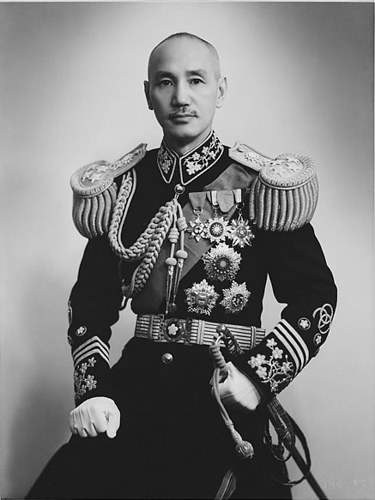
Chiang
Kai-shek, the general who held in his hands, unopposed by the
communists, the armed bodies of men in revolutionary Guangzhou, and his
ally Tai Chi-tao, quickly came to represent this layer of Guomindang
rightists in their mission to re-establish ties with the big, compradore
bourgeoisie and imperialists against the workers. Although this move
was opposed by the Guomindang leftists (more so than by the CCP in
fact!), what could they do to oppose it without mobilising the
revolutionary masses?
Imperialism Steps in once again
Unless
one takes the line that the Comintern was consciously sabotaging the
revolution, which cannot be entirely ruled out, we must say that the
imperialists displayed far greater intelligence, cunning and
understanding of the class dynamics of Chinese society than the
Comintern. We revolutionaries can ill afford light-mindedness and
illusions.
No
doubt thanks to their experience in managing colonial oppression, the
more intelligent imperialists quickly understood what the outbreaks of
mass strike action meant, and initiated a policy of rapprochement with
the Chinese bourgeoisie, offering petty concessions to national
sovereignty such as tariff autonomy. At the same time they played on the
inevitable fears of the whole of the Chinese bourgeoisie, even the
liberal, anti-imperialist sections, that the strikes were out of hand,
threatened private property and represented foolish insolence on the
part of the rabble, who would bring the whole of Chinese society down
with them. And then the foreign and native big businessmen starved
Shanghai and Guangzhou of supplies to let it be known that they too had
economic and social might. They employed a “carrot and stick” tactic,
where the carrot was dangled in front of the Chinese bourgeoisie, and
with the stick the masses were given a good beating.
Trotsky very truthfully stated:
“It
is a gross mistake to think that imperialism mechanically welds
together all the classes of China from without… The revolutionary
struggle against imperialism does not weaken, but rather strengthens the
political differentiation of the classes… everything that brings the
oppressed and exploited masses of the toilers to their feet inevitably
pushes the national bourgeoisie into an open bloc with the imperialists.
The class struggle between the bourgeoisie and the masses of workers
and peasants is not weakened, but, on the contrary, it is sharpened by
imperialist oppression, to the point of bloody civil war at every
serious conflict.” (Trotsky, The Chinese Revolution and the Theses of Stalin).
Prior
to these events one could be forgiven for thinking that this was not
so. The imperialists managed to alienate the whole of Chinese society
with their racism, cordoning off special areas of cities as
“concessions” in which only rich westerners were permitted to move
(except for their servants of course). Even the most illustrious of
Chinese businessmen were denied entry to these gentlemen’s clubs.
But
revolutions are good for bringing into sharp relief the real class
relations. In this gravest of hours for imperialism, when these
westerner only concessions were starved of resources and humiliated by
the striking workers, the British, American and French suddenly forgot
their racism. Eminent Chinese “gentlemen” were invited into a special
meeting with the most powerful western businessmen on March 18th,
1926 in precisely the concession area in Shanghai from which they were
previously denied access. This was only two days before Chiang Kai-shek
would violently seize power from the more established Guomindang leaders
in Guangzhou. High praise and sickly sweet compliments were exchanged
from both sides, an hour of dire need was declared, and a common
interest in preventing any future nonsense from the working class
agreed. Interestingly, the American chairman of the meeting stated that a
fatal “extreme credulousness of the Chinese working classes” had been
displayed, and that therefore this must be “taken advantage of for their
good and ours.”
In other words, from this point onwards, the
Chinese bourgeoisie gave up its superficial anti-Westernism, it had now
achieved “the kind of social revolution they wanted” (Isaacs, ibid), and
had become fully conscious, along with the imperialists, of the need to
exploit the weak leadership of the working class and to use their
influence and connections to control the Guomindang leadership. They
were able to fool the workers thus only because the CCP was artificially
shackled within the Guomindang, unable to present an alternative
leadership.
The manoeuvrings within the Guomindang continued. Liao
Zhongkai, finance minister for the government in Guangzhou and the CCPs
closest ally in the Guomindang, was executed in August 1925. As one of
the most prominent Guomindang leaders and a representative of its far
left, it is not hard to understand the significance of his murder, which
resulted in the balance of forces shifting to the right in the top of
the party. Hu Hanmin, a leading Guomindang right winger, was arrested
for his murder, and shamefully Borodin, the Comintern representative in
China, helped him escape punishment. Not only this, but he later was
presented to the Comintern as a “sympathiser” and given a leading role
in the “Krestintern”, the so-called international peasant union. This,
along with many other facts, displays the extent to which the Comintern
would fly in the face of the reality of the Chinese revolution in its
desperate attempt to befriend the Chinese bourgeoisie.
This also
raises certain questions of tactics. It would be false and one sided to
say that the Guomindang, including its left wing, was one reactionary
bloc. It is true that they were tied to the bourgeoisie, who were
reactionary. But should communists who are only in the process of
establishing a mass base in the working class, and in colonial countries
which have not had a bourgeois revolution, adopt the same hostility
toward bourgeois parties as in the West, where the national bourgeois is
already firmly in control? One must recognise the continuing hold over
the masses, still filled with illusions in the democratic bourgeoisie,
that these parties have, especially in largely peasant countries where
winning over the peasants is of the utmost importance to the working
class.
In 1917 the Bolsheviks offered an alliance in government
with the petty bourgeois Social Revolutionary Party (SR), or at least
its left wing, and they adopted the SR’s land reform programme. This was
absolutely correct in the circumstances, under the precondition that
the Bolsheviks were clearly distinguished as a separate party of the
working class. In certain circumstances it is tactically correct for
communists to propagandise in favour of a revolutionary constituent
assembly, that is a bourgeois parliament, so long as they explain its
limitations and use it always to show the bourgeoisie’s real
counter-revolutionary role by refusing to call such an assembly.
People
such as Liao Zhongkai, as well as millions of ordinary Chinese who
supported the Guomindang more passively, could have been won to the
Communist cause provided the CCP were free to present an alternative
leadership and to criticise the likes of Chiang Kai-shek. In the absence
of this, such leaders either capitulated to the Guomindang right wing
or were simply killed.